


Building a diaper product line doesn’t have to require a large initial investment. With clear planning, phased development, and strategic decisions in materials and packaging, brands can reduce unnecessary expenses and still launch products that meet market expectations. The goal is not simply to save money, but to spend wisely—especially in the earliest stages of product development.
1. Start With Focused Product Specifications Instead of Full Customization
A major portion of early costs often comes from excessive experimenting—too many material trials, too many design variations, and premature “nice-to-have” customizations. New brands frequently attempt to create a perfect product from day one, but perfection is often a market-driven process, not an upfront investment.
Working with a manufacturer’s existing material library is one of the simplest ways to keep expenses low. Most factories already stock multiple topsheet textures, elastic waistbands, and absorbent core grades; selecting from these reduces sampling fees and eliminates long waits for special materials. One of our clients in Southeast Asia originally planned a fully custom core composition but switched to a pre-tested configuration. Not only did it cut their sampling rounds in half, but it also reduced their first production cost by more than 18%.
By prioritizing what truly differentiates the product—fit, absorbency expectation, market positioning—you avoid spending on features that buyers may not notice. Early-stage efficiency lets you enter the market faster, gather real feedback, and refine your specifications only once you understand what customers actually value.
2. Simplify Packaging and Production Batching During the Launch Phase
Packaging is one of the easiest areas to overspend, especially when brands want fully custom designs, special printing effects, or multiple SKUs before sales data exists. Keeping early packaging simple—yet professional—reduces both unit cost and production risk.
Some brands choose a universal bag design that works for multiple sizes, using small size-indicator stickers rather than separate artwork files. Others use clean, minimalist packaging that avoids complex printing plates. These approaches can lower plate-making costs and reduce the minimum order quantity, giving the brand more flexibility. We’ve seen startups successfully launch with just two SKUs packaged in identical bags, delaying complex packaging expansion until sales were stable. The saved cost was later invested in marketing—where it actually drives growth.
Batch size also affects initial spending. Instead of ordering full-container quantities, many brands begin with mixed-size pallet loads or partial batches. While unit cost may be slightly higher, overall capital outlay is far more manageable. The right balance depends on cash flow, warehouse capacity, and speed of turnover—but the key is avoiding overproduction before your first sales cycle.
3. Build a Phased Development Plan Instead of Paying for Everything Upfront
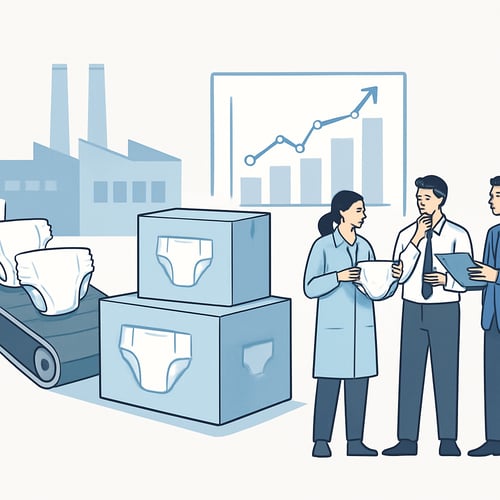
A phased approach spreads costs and lowers risk. Rather than developing your full lineup at once, launch with the core SKU—the one most aligned with your target customers—and expand slowly as you collect performance and sales data. This avoids paying for unnecessary mold adjustments, plate fees, certifications, and product testing all at once.
In practice, brands that phase their development make better decisions with less money. They test one size first, confirm fit accuracy, optimize leakage protection, and only then move to additional sizes. This method also speeds up improvements because each phase incorporates direct consumer feedback. One European brand we worked with launched only the M size for online testing, gathered user insights about breathability and leg-cuff softness, and applied these refinements to all later SKUs. Their total revision cost was 40% lower than if they had revised five sizes at once.
A phased plan does more than reduce expenses—it increases learning speed, improves product-market fit, and reduces the financial burden of early-stage decisions.
Conclusion
Lowering initial costs in diaper OEM/ODM projects is not about cutting corners—it’s about allocating resources intelligently. By focusing on essential specifications, simplifying packaging, and developing your product line in stages, new brands can launch confidently with far less financial pressure. Cost efficiency becomes a strategic advantage, allowing you to put more investment where it truly matters: scaling your brand.
